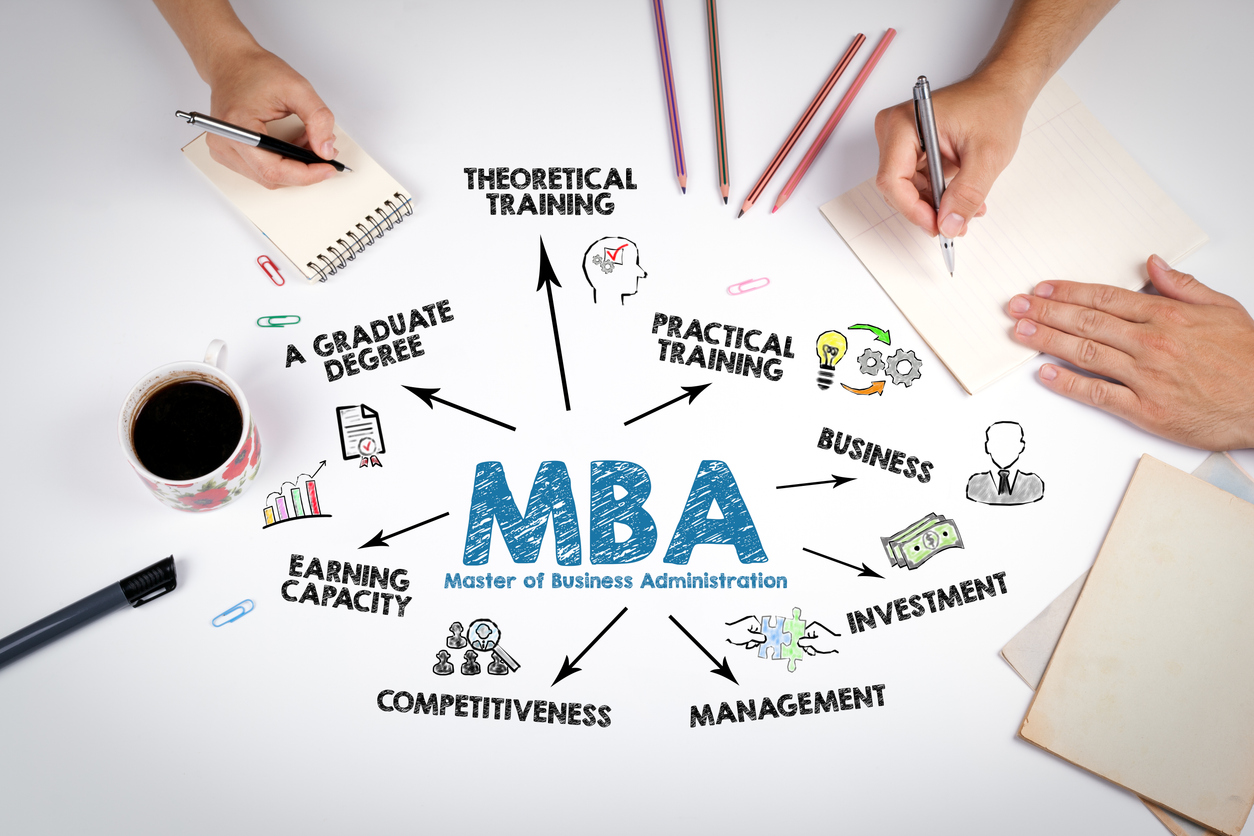
Applying to MBA Programs as a Working Professional
By
Stephanie Chen
December 10, 2025
•
2
min read
Share this Article
Simply highlight text to share on social or email
If you’re applying to MBA programs as a working professional, you’re bringing something deferred and early-career applicants cannot: real-world experience, a track record of leadership, and evidence of how you operate in complex environments. At top programs such as Harvard, Stanford, Wharton, MIT Sloan, Columbia, this matters. But so does how you shape the story behind it.
The truth is simple: professional applicants often underestimate both their competitive advantages and the strategic narrative work required to stand out. If you’re aiming for a top-tier MBA, you need more than a strong résumé. You need a coherent, future-facing leadership arc that shows admissions committees exactly who you are becoming.
Here’s the playbook.
What Top MBA Programs Expect From Working Professionals
1. Leadership and Not Just Experience
You don’t need to have “Manager” in your title. Admissions committees want evidence of leadership in any form:
- Owning initiatives
- Influencing stakeholders
- Managing ambiguity
- Driving measurable results
- Coordinating teams, cross-functional groups, or clients
If you’ve led without authority, improved systems, or created impact in a lean environment, that counts.
The bar is not years of experience. The bar is: “Can this candidate lead at scale?”
2. Career Progression and Upward Mobility
A résumé that simply shows time spent at a company doesn’t impress top programs. They want to see:
- Promotions
- Scope expansion
- Increased responsibility
- Data-backed evidence of performance
- Strategic moves that make sense
They’re assessing your trajectory: where you’re heading, not just where you’ve been.
3. Clarity of Post-MBA Goals
Professional applicants must articulate their next step with precision:
- Short-term goal: realistic, well-informed, industry-aligned
- Long-term goal: ambitious but credible
- Connection to program resources: clear, specific, and intentional
The question every committee asks: “Does this candidate know why they need an MBA now?”
Your job is to prove the timing is right, not just convenient.
4. Impact Metrics and Operational Rigor
Top programs are data-driven. Your application should be, too.
Strong candidates quantify their contributions:
- Revenue: “Grew portfolio by 22% in one fiscal year.”
- Efficiency: “Reduced processing time by 40%.”
- User growth: “Scaled platform from 5,000 to 35,000 monthly active users.”
- Market expansion: “Opened two new regional markets generating $3M in annual pipeline.”
Impact creates credibility. Numbers tell your story better than adjectives.
5. Collaborative Leadership
The MBA classroom is built on shared learning: programs admit people who elevate the cohort.
Show how you:
- Build relationships
- Mentor others
- Work cross-functionally
- Drive consensus
- Navigate conflict with emotional intelligence
Top schools are allergic to lone wolves.
6. Self-awareness and Coachability
Professional applicants often struggle here, but it’s a differentiator. Schools want leaders who can reflect, evolve, and challenge themselves.
Demonstrate:
- Lessons learned from setbacks
- Awareness of growth opportunities
- Ability to evaluate your decisions
- Willingness to be transformed by the MBA experience
You’re applying not because you’ve “made it,” but because you’re ready for your next inflection point.
Brief Descriptors of the Top 5 MBA Programs (for Professional Applicants)
Harvard Business School (HBS): The General Management Powerhouse
Harvard trains leaders who can operate across industries, functions, and global contexts.
Strengths:
- Case-method intensity
- Broad, cross-functional perspective
- Emphasis on values-based leadership
Best fit for applicants who:
- Thrive in discussion-driven environments
- Aim for high-impact leadership roles
- Want a platform with unmatched alumni reach
Stanford Graduate School of Business (GSB): The Innovation + Self-Reflection Epicenter
Stanford is the most selective MBA program for a reason.
Strengths:
- Deep focus on personal leadership development
- Entrepreneurial ecosystem anchored in Silicon Valley
- Culture of authenticity and introspection
Best fit for applicants who:
- Are mission-driven
- Want to build or reinvent industries
- Have a differentiated story or unconventional pathway
Wharton School (UPenn): Analytical Rigor Meets Strategic Flexibility
Wharton’s reputation extends far beyond finance.
Strengths:
- World-class analytics
- Breadth across entrepreneurship, healthcare, tech, and management
- Highly customizable curriculum
Best fit for applicants who:
- Want deep quantitative grounding
- Thrive in large, high-performing cohorts
- Seek cross-disciplinary opportunities with UPenn
MIT Sloan: The Home of Builders, Innovators, and Operators
MIT Sloan cultivates leaders who solve problems, optimize systems, and build the future.
Strengths:
- Data-driven leadership
- Innovation and entrepreneurship
- Action learning embedded in coursework
Best fit for applicants who:
- Have an analytical or technical background
- Thrive in hands-on, experiential contexts
- Identify as operators, product builders, or systems thinkers
Columbia Business School (CBS): New York City’s Industry-Embedded MBA
Columbia leverages the momentum, access, and immediacy of New York.
Strengths:
- Finance, consulting, real estate, media, and luxury
- Strong, recruiter-facing programs
- Rolling admissions (apply early!)
Best fit for applicants who:
- Want direct industry immersion
- Prefer a fast-paced, urban program
- Value strong ties to global employers
How Professional Applicants Stand Out in a Competitive Pool
1. Treat your résumé like a performance document
Highlight:
- KPIs
- Scope increases
- Leadership moments
- Strategic decisions you influenced
Remove task lists. Elevate outcomes.
2. Build a cohesive narrative that connects past → present → future
Your story must demonstrate:
- Logical progression
- Increasing responsibility
- A clear reason for pivoting or accelerating now
- How the MBA fits into your broader arc
Admissions committees want to see the “why,” not just the “what.”
3. Choose recommenders who can speak to your leadership and character
Titles don’t matter—insight does.
Your recommender should be able to:
- Give concrete examples
- Speak to your growth
- Describe how you drive results
- Explain why you’re ready for the next step
4. Show that you understand the MBA investment—and are ready to maximize it
Top programs look for professionals who will:
- Engage deeply
- Contribute actively
- Recruit effectively
- Leverage alumni resources
- Drive value for peers
The MBA is a two-year opportunity engine. Show you know what to do with it.
Ready to Apply? Build a Strategy That Reflects Your Full Professional Potential
MBA admissions at the top level are competitive, but they’re also highly predictable when you understand what schools value and how to translate your experience into a compelling leadership story.
AtomicMind helps working professionals:
- Clarify their career trajectory
- Craft powerful, data-backed résumés
- Develop high-impact essays
- Identify and prepare the right recommenders
- Execute interview strategies that showcase leadership and authenticity
If you’re ready to accelerate your career through an MBA and want a partner who understands how to position your professional experience for maximum impact, we’re here to guide you.
Reach out to AtomicMind to start building your MBA application strategy today.

About the Author: Stephanie Chen is the Director of Marketing at AtomicMind, where she leads brand strategy and outreach. She earned her B.A. from Brown University and her M.B.A. from Columbia Business School. Stephanie is passionate about expanding access to quality education through thoughtful storytelling and strategic growth.

Share this Article